

How do you measure success?
Is success based on measurable data and figures, or is it more qualitative? Is the value of something based on the end results, or can simply having a go be valuable? Is something only of worth when it is seen, or can worth be found in hidden places?
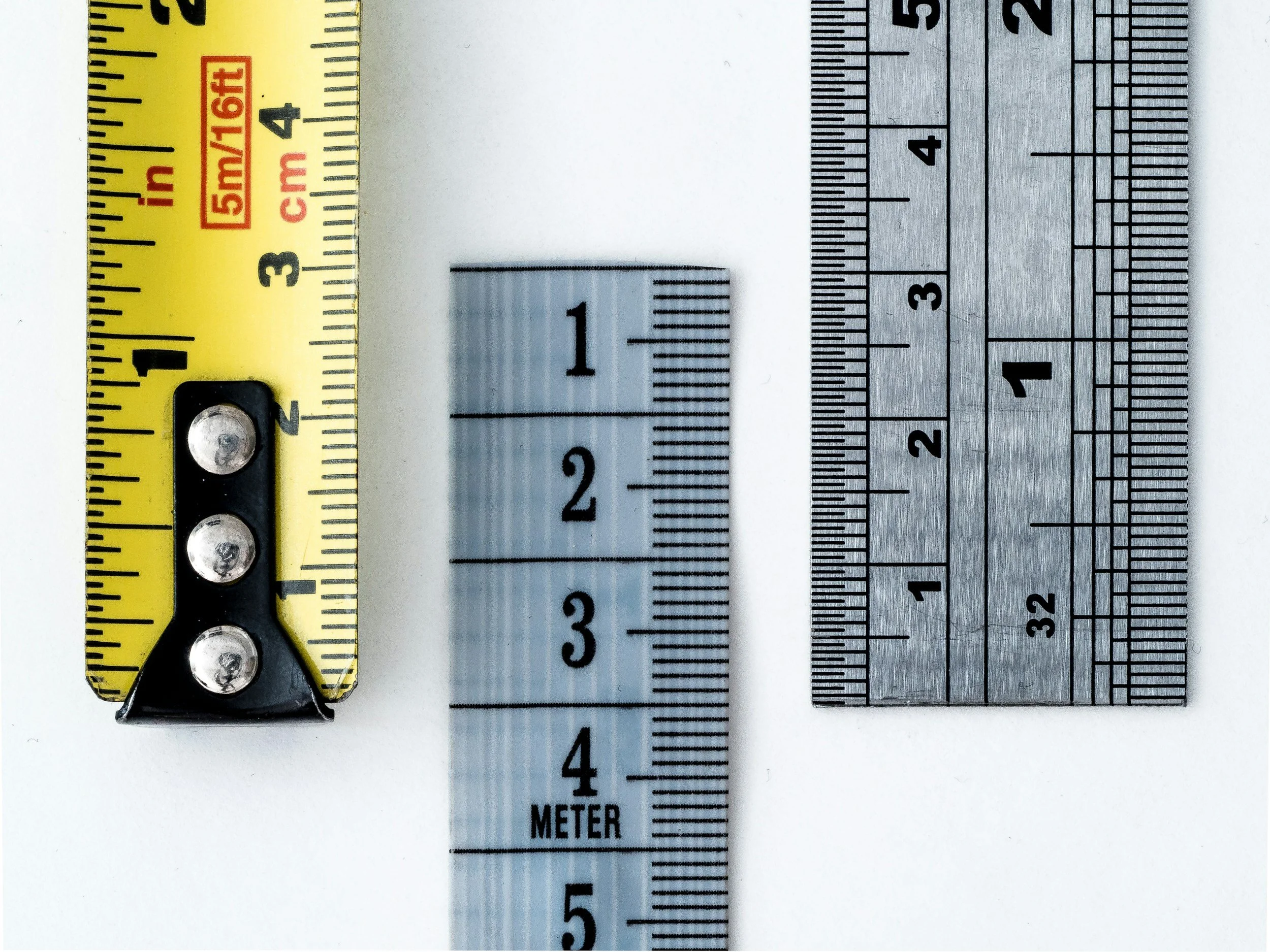
I want to do things well. I want to make things that have a positive impact on the world. When I try something, I don’t want it to fail.
It’s a good desire to want to do things that are of value in the world. We were made to do good works and to live with a sense of purpose.
However, we can run into many problems when it comes to determining if something is successful or not. It all depends on how you define success in the first place and what factors you are measuring it against.
It is very easy to measure what we do by quantitative factors such as number of people interested, or amount of recognition online. These are essentially valid measures of success in worldly terms. However, I believe that God measures things very differently. How things are measured in the kingdom of God is quite a contrast to how things are measured in this world.
Success and failure are subjective. There are lots of different ways that you could measure success, but not every way is helpful. As Christians, we need to have a renewing of our minds in order to see things in the way that God sees them.
Let’s look at one of Zechariah’s visions.
‘Then I looked up, and there before me was a man with a measuring line in his hand. I asked, “Where are you going?”
He answered me, “To measure Jerusalem, to find out how wide and how long it is.”
While the angel who was speaking to me was leaving, another angel came to meet him and said to him: “Run, tell that young man, ‘Jerusalem will be a city without walls because of the great number of people and animals in it. And I myself will be a wall of fire around it,’ declares the Lord, ‘and I will be its glory within.’’
(Zechariah 2:1-5)
The man had a ruler in his hand and was attempting to measure the city of Jerusalem with it. Now, this would have been possible, in a sense. It would take a long time, but you could take a stick to the city of Jerusalem and get a good idea of its area.
However, the angel is urgent in stopping the man. What the man was trying to measure would actually be a worthless measurement. He was focussed on the temporary city of Jerusalem, while in the vision, the eternal, holy city is what is being presented.
In Revelation 21:2, John sees ‘the Holy City, the new Jerusalem, coming down out of heaven from God, prepared as a bride beautifully dressed for her husband.’ I don’t know what that looks like, and I’m pretty sure you can’t measure it with a ruler! This eternal kingdom is not something that can be boxed into neat walls.
The important thing to note in this vision is not the size of Jerusalem, but the fact that God will be dwelling with His people. That is what is truly significant. The man was measuring the wrong thing.
Let’s think about some real life examples of taking measurements.
Imagine you work at a greengrocer and someone comes to buy some potatoes. You need to work out how much they need to pay for these potatoes. Now, I don’t think you would get out a tape measure and measure the circumference of each potato. This would give you some information about the size of the potatoes, but it’s not an accurate measure of their value. What needs to be measured in order to determine the price is the weight. You don’t need a tape measure, but you need scales.
Imagine you are part of organising a 5km Parkrun and someone asks you to measure the course. You wouldn’t turn up with a metal probe to measure the pH of the soil on the course. Essentially you are following instructions… you are measuring the course, just in the wrong way. What is important is to measure the length of the course. You can’t use a probe to measure that, but you need a trundle wheel or a calibrated bike.
There are all sorts of ways to measure things, but not every way is beneficial or helpful.
Let’s think about some things that we might measure in our Christian lives.
If you are part of a church, a fairly easy way to measure that church is to count the number of people in it. However, in the kingdom of God, I believe that’s like taking a tape measure to a potato. Counting people will give you some indication of what the church is like, but it’s not an accurate reflection of what is truly important, or of how God might view the church.
In this modern age, an easy way to measure the success of a ministry or organisation is through views, likes, impressions and recognition online. Again, this is like taking a pH probe to a Parkrun course. Yes, you are measuring something, but does this measurement really have any worth in the kingdom of God? Is the number of likes what is important to measure? Is this what God is concerned about?
Jesus measures 7 churches in the book of Revelation. Never once does He mention the number of people in those churches.
He does talk about wealth, but not in a way in which the world might measure success. To the church in Smyrna, He says, ‘I know your afflictions and your poverty – yet you are rich!’ (Revelation 2:9) Yet to the church in Laodicea, He says, ‘You say, “I am rich; I have acquired wealth and do not need a thing.” But you do not realise that you are wretched, pitiful, poor, blind and naked.’
Quantifiable measures of success – the wealth of these churches – do not correlate with the actual success of the churches. Jesus looks at the heart, not the numbers.
To the church in Sardis, He says ‘You have a reputation of being alive, but you are dead.’ (Revelation 3:1) If this were the present day, the church in Sardis would have a thriving TikTok account where they post every day about all their midweek activities and exploits. They appear to be thriving. But Jesus doesn’t measure them by their recognition. He looks at their heart.
It is so easy to measure quantifiable factors like number of people involved or number of views. It’s not surprising that we do it, because these are real factors that carry weight and worth in the world’s eyes. We as Christians need a renewing of our minds in the way that we measure things in order to come a little closer to how God views things.
Measuring the success of something (based on subjective factors) is essentially judging something.
Our judgement is not very good. You only need to open your Bible and read a few verses to see that.
God is the only true and fair judge. Only He sees things for what they truly are. Only He has a full and complete understanding and perspective on circumstances in order to judge rightly.
We only see things partially, and we often end up using measuring tools that have no worth in the kingdom of God.
So should we even try to measure, judge or weigh anything at all?
Well, partly, I believe that forming judgements should not be an aim or focus for us at all. God is the only fair judge, so we shouldn't try to do His job for Him.
Jesus says: ‘Do not judge, or you too will be judged. For in the same way you judge others, you will be judged, and with the measure you use, it will be measured to you.’ (Matthew 7:1-2)
This is very clear. Jesus warns us against judging because He knows it is not beneficial for us, and that we often use the wrong measure anyway.
I do believe, however, that it is good to reflect on our lives and “weigh up” how things are going in order to keep walking the narrow path, keep learning and keep moving forwards.
So how do we healthily reflect on our lives without sitting in a place of judgement or using the wrong measures?
For our own lives, a good measure of “success” is obedience.
Measuring obedience has nothing at all to do with outcomes. You can be obedient to God in something and see no measurable results by the world’s standards. You can also be obedient to God and see massive quantifiable “success”. That’s not what is truly important though.
Measuring by obedience means surrendering the outcomes to God.
Let’s think about some of the Old Testament prophets. Who was the most successful prophet, in terms of the number of people turning back to God?
Well, in the case of Jonah, the whole of Nineveh repented after his preaching! But was he the most obedient prophet? Certainly not!
If we look at prophets such as Jeremiah or Ezekiel, they certainly weren’t very successful by the world’s standards. They were persecuted and ignored by the people. But were they obedient to God? My goodness, yes. What radical obedience.
Any recognition we receive on earth is our reward fully given. It is the things that are not always recognised, celebrated and measured in the world (e.g. obedience) that will result in heavenly reward.
Now, I’m someone who is a big dreamer. I’m a hopeful optimist. However, obedience means surrendering my dreams and expectations to God. It is good to still remain hopeful, but I have been on a journey of learning to be expectant, whilst surrendering my specific expectations.
I’m not talking about not caring about the outcomes. It is good to care about how things will turn out and to want to have an impact on the world. But if things don’t go as we expected, it doesn’t mean it is a failure. It’s not wasted time. All we need to do is be obedient, and surrender the rest to God.
Let’s look at a story in the Bible about obedience. This is 1 Samuel chapter 15, shortened, to get the gist of the story, but I would really encourage you to go and read the whole passage!
“Samuel said to Saul, “...listen now to the message from the Lord … Now go, attack the Amalekites and totally destroy all that belongs to them. Do not spare them; put to death men and women, children and infants, cattle and sheep, camels and donkeys.’”
Then Saul attacked the Amalekites … He took Agag king of the Amalekites alive, and all his people he totally destroyed with the sword. But Saul and the army spared Agag and the best of the sheep and cattle, the fat calves and lambs – everything that was good. These they were unwilling to destroy completely, but everything that was despised and weak they totally destroyed.
Then the word of the Lord came to Samuel: “I regret that I have made Saul king, because he has turned away from me and has not carried out my instructions.”
Early in the morning Samuel got up and went to meet Saul …
When Samuel reached him, Saul said, “The Lord bless you! I have carried out the Lord’s instructions.”
But Samuel said, “What then is this bleating of sheep in my ears? What is this lowing of cattle that I hear?”
Saul answered, “The soldiers brought them from the Amalekites; they spared the best of the sheep and cattle to sacrifice to the Lord your God, but we totally destroyed the rest.”
“Enough!” Samuel said to Saul … “The Lord anointed you king over Israel. And he sent you on a mission, saying, ‘Go and completely destroy those wicked people, the Amalekites; wage war against them until you have wiped them out.’ Why did you not obey the Lord? …”
“But I did obey the Lord,” Saul said. “I went on the mission the Lord assigned me. I completely destroyed the Amalekites and brought back Agag their king. The soldiers took sheep and cattle from the plunder, the best of what was devoted to God, in order to sacrifice them to the Lord your God at Gilgal.”
But Samuel replied:
“Does the Lord delight in burnt offerings and sacrifices as much as in obeying the Lord? To obey is better than sacrifice…
Then Saul said to Samuel, “I have sinned. I violated the Lord’s command and your instructions. I was afraid of the men and so I gave in to them…”
(1 Samuel 15 - shortened)
This is a sobering story. Saul almost fully obeyed God, but because he was not fully obedient to the command, God rejected Him as king.
Essentially, what Saul did looked like a great success. He defeated the Amalekites and kept the best behind in order to give back in sacrifice to God. This looks like quite a noble thing to do.
However, this was not what God required. Partial obedience, no matter how noble or well-intended, is not success in God’s eyes.
A key thing to note here is that the thing that stopped Saul from obeying God fully was the fear of man. He even admits it himself: ‘I have sinned. I violated the Lord’s command and your instructions. I was afraid of the men and so I gave in to them’ (1 Samuel 15:24)
Our warped and worldly measures of success often come from being too heavily focussed on the opinions of others.
The need to count heads and tally up likes can come from a place of wanting to prove our worth to others. It can often stem from an over-fascination on how we are perceived.
I find myself falling into this all the time. I want others to look at what I’m doing and see that it’s going well and being successful. Counting numbers can be an easy way to say “Hey look, things are going well! People are taking notice! I’m getting recognition!” However, ultimately this stems from insecurity.
So how do we move from measuring success in worldly terms, to healthy reflection and discernment, and finding security only in what God thinks of us?
This is not easy. It’s not a mindset that we can shift in a day, nor is it something that we might ever fully "achieve".
This is a good thing though, because any area where we are in constant need of God to help us is a good place to be.
Firstly, in order to be obedient to God, we must stay close to Him in order to hear what He is saying. This is something that is between you and God. Your relationship with Him takes time to develop and grow in the secret place.
Secondly, we must also stay close to God so that we become so secure in what He thinks that we don’t need to go searching for worldly success or validation from others. The opinions of God must drown out all other opinions.
Response
Lord, are there any ways in which I am measuring my own life by the wrong measurements?
Lord, am I judging or measuring other people or things by the wrong standards? Help me to release these things to You.
Lord, help me to be only concerned with what you think of me. Help me to walk in obedience to you.